The Delirium UK Top 10 Research Priorities
People affected by delirium have told us what research matters most.
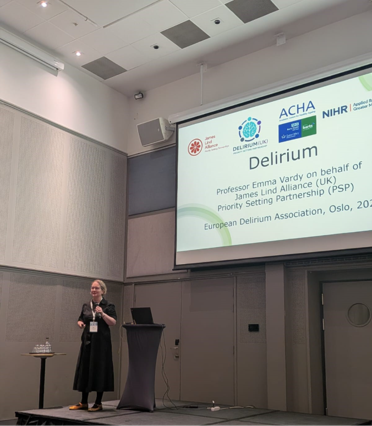
Patients, carers, family members and health and care professionals have agreed the UK’s Top 10 research priorities for delirium through the James Lind Alliance process. The priorities were launched at the 21st European Delirium Association conference in Oslo in November 2026.
The Top 10
- What approaches work best to shorten how long delirium lasts and make it less severe?
- What affects a person’s recovery from delirium, and its long-term effects on health, daily activities, and quality of life?
- Which education and training are most effective in helping staff recognise, understand, and support people with delirium, so that care is safe, compassionate, and centred on the person’s needs and wishes?
- Which combined approach(es) (multi-component) is the best overall strategy to treat delirium?
- How should delirium be identified, prevented and managed effectively in the community to reduce hospital admissions?
- Why does delirium look different in different people, and how can it be recognised reliably despite these differences?
- What is the best way to support people with delirium when they leave hospital and return home, including helping them stay safe, making sure everyone understands what is happening, and ensuring important information is shared between healthcare services?
- How should health care professionals best communicate with and support patients experiencing delirium and their friends, families and carers?
- What changes happen in the brain and body during delirium, and how do these changes vary between different forms of delirium?
- How can healthcare professionals tell the difference between delirium and other conditions, such as memory problems or long-term brain conditions?
Thank you
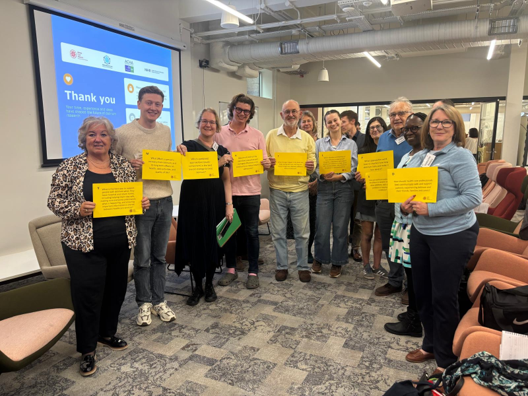
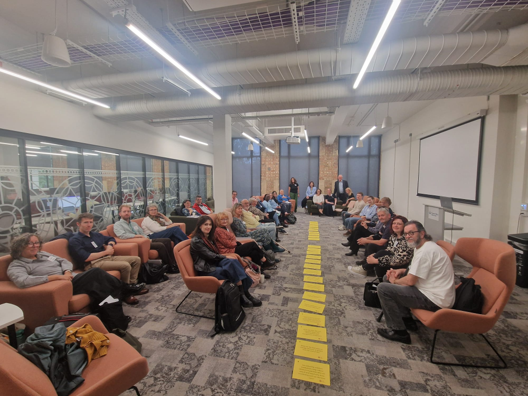
These priorities exist because of everyone who shared questions, completed the surveys and joined the final workshop. Thank you for your time, and for sharing your experiences.
How the priorities were agreed
The Partnership brought together:
- people who have experienced delirium
- people who have cared for, or are close to, someone with delirium
- health and social care professionals who treat people with delirium or care for those at risk
A first survey gathered the questions people wanted answered, and a second asked which of them mattered most. The Top 10 was then agreed at a final workshop in October 2026.
Watch a video about the James Lind Alliance process
What is delirium?
Delirium is a sudden state of confusion that often develops over hours or days. It is usually triggered by illness, injury or surgery, and it can happen at home, in a care home or in hospital. People may have trouble with their memory, behave differently, or see or hear things that are not there. Delirium often gets better when its cause is treated, but it can sometimes last longer.
Watch a video explaining delirium
What happens next
- Funders and researchers: please use the Top 10 to shape funding calls and new studies.
- Health and care staff: please share the Top 10 with your teams and get involved in research that answers these questions.
- Everyone: please read the Top 10, share it, and find out how to get involved in delirium research.
Colleagues in Australia and New Zealand have run their own James Lind Alliance partnership on delirium, and we will compare our results to see where priorities are shared and where they differ.
Who led this work
The Partnership was led by Professor Elizabeth Sampson and Professor Emma Vardy. It was funded by the Academic Centre for Healthy Ageing (ACHA), a collaboration between Barts Health NHS Trust, Queen Mary University of London and Barts Charity. It was supported by the NIHR Greater Manchester Applied Research Collaboration and the James Lind Alliance, a non-profit initiative hosted by the National Institute for Health and Care Research.
Get Involved
Have you or someone you care for experienced delirium? We are looking for people in Redbridge, Waltham Forest, Newham or Tower Hamlets who have experienced delirium themselves or cared for someone who has, and who would be willing to share their story to help raise awareness of its impact. You will be compensated for your time, and any travel expenses will be reimbursed. If you would like to find out more, please contact Dr Alexandra Feast at a.feast@qmul.ac.uk.
Find out more
- Delirium (UK) James Lind Alliance Priority Setting Partnership
- Delirium (Australia and New Zealand) James Lind Alliance Priority Setting Partnership
Contact
Dr Alexandra Feast: a.feast@qmul.ac.uk
Academic Centre for Healthy Ageing, First Floor, Junction 2, Whipps Cross Hospital, Whipps Cross Road, Leytonstone, London, E11 1NR